A useful place to start
One-Pot Tomato & Basil Orzo brings together orzo, tinned tomatoes, vegetable stock in a method designed around ordinary home-kitchen equipment. The recipe below gives you the quantities, cooking sequence and finishing cues in one place. Read it through before starting, especially if you need to allow a separate chilling, proving or resting period. Orzo settles against the base so stir often. Use the related tools when you need different servings or equipment.
The ingredient list makes 4 servings. That is a recipe yield, rather than a fixed appetite target: a side dish or dessert can be divided differently at the table. Measure the main ingredients before heating a pan or mixing the batter, and check that your vessel has enough room. Add spinach near the end. Any optional addition should suit the dish and be checked for allergens alongside the original ingredients.
Why this recipe works
Orzo settles against the base so stir often. That detail controls an important part of the texture rather than simply adding another instruction. Pasta continues absorbing liquid after it leaves the cooking water. Finish it in the sauce while both are hot, then add reserved cooking water a little at a time. The aim is a coating that clings to the pasta rather than a separate pool of liquid. If the sauce looks thick while the pan is still on the heat, loosen it slightly because it will tighten further on the plate.
The method separates preparation from the stages where heat, moisture or setting time matter most. Keeping the stated order gives you a chance to check the mixture before moving on. Use low-salt stock if adding salty cheese. If you make that adjustment, keep the rest of the recipe close to the original on the first attempt so you can judge what changed and whether the balance suits your own kitchen.
Ingredient notes for One-Pot Tomato & Basil Orzo
Orzo
Orzo is a small pasta shape rather than a grain of rice. It releases starch into the cooking liquid and settles easily against the bottom of the pan. Stir a one-pot orzo dish regularly, especially as the liquid reduces. If you replace it with another pasta shape, both the time and the liquid requirement may change, so check the texture as it cooks.
Tinned tomatoes
Tinned tomatoes bring both liquid and acidity. Simmering before adding cream or other delicate ingredients helps the flavour come together. Fresh tomatoes release variable amounts of water, so they are not always a direct replacement in a one-pot recipe. Keep the pan at a gentle simmer and stir near the base as the mixture thickens, rather than increasing the heat to hurry it.
Vegetable stock
Choose vegetable stock in the form named in the ingredient list, and measure it before you start cooking. Fresh, dried, concentrated and sweetened versions can behave differently, even when the package names look similar. Read the label for storage instructions and allergens. Prepare it as described in the method so it mixes, softens or browns at the right stage rather than being added as an afterthought.
Onion
Choose onion in the form named in the ingredient list, and measure it before you start cooking. Fresh, dried, concentrated and sweetened versions can behave differently, even when the package names look similar. Read the label for storage instructions and allergens. Prepare it as described in the method so it mixes, softens or browns at the right stage rather than being added as an afterthought.
Garlic cloves
Fresh garlic gives a clearer flavour than a large amount of garlic powder. Crush or finely chop the cloves so their flavour spreads evenly, then add them at the stage shown in the method. Garlic can turn bitter if it is fried too dark before liquid is added. If your cloves are unusually large, you can start with fewer and adjust on another occasion.
Olive oil
Use the listed amount of oil as a starting quantity rather than filling the base of the pan. A neutral oil is helpful when you want the other ingredients to lead, while olive oil contributes its own flavour. Brush or toss food evenly for roasting and air frying. Adding more oil does not compensate for overcrowding, which still traps moisture and prevents even browning.
Basil
Choose basil in the form named in the ingredient list, and measure it before you start cooking. Fresh, dried, concentrated and sweetened versions can behave differently, even when the package names look similar. Read the label for storage instructions and allergens. Prepare it as described in the method so it mixes, softens or browns at the right stage rather than being added as an afterthought.
Vegetarian hard cheese
Grate firm cheese finely so it melts or browns evenly. Some hard cheeses use animal rennet; choose a product explicitly labelled suitable for vegetarians when that matters. Salt levels vary between brands, so taste savoury food after adding the cheese before adding more salt. Soft cheese for a chilled dessert should match the full-fat specification if you want the filling to hold its shape.
How to make One-Pot Tomato & Basil Orzo
Step 1
Soften chopped onion in oil for 5 minutes. Have the ingredients and equipment for the next stage ready before continuing. Work in the order shown so you can check the texture while it is still easy to adjust. Use clean utensils for finished food, taste only when the ingredients are safe to eat, and make small changes rather than adding a large amount of liquid or seasoning at once.
Step 2
Add crushed garlic and orzo and stir for 1 minute. Have the ingredients and equipment for the next stage ready before continuing. Work in the order shown so you can check the texture while it is still easy to adjust. Use clean utensils for finished food, taste only when the ingredients are safe to eat, and make small changes rather than adding a large amount of liquid or seasoning at once.
Step 3
Add tomatoes and stock and bring to a gentle simmer. Look for small, steady bubbles rather than a vigorous boil. Gentle cooking lets flavours mix while giving you time to control the thickness. Stir at the base and around the corners where food can catch. If the mixture reduces too far before the main ingredient is ready, add a small amount of water or the specified liquid and continue checking.
Step 4
Cook for 12–15 minutes, stirring frequently and adding water if needed. Have the ingredients and equipment for the next stage ready before continuing. Work in the order shown so you can check the texture while it is still easy to adjust. Use clean utensils for finished food, taste only when the ingredients are safe to eat, and make small changes rather than adding a large amount of liquid or seasoning at once.
Step 5
Stir in torn basil and vegetarian cheese. Have the ingredients and equipment for the next stage ready before continuing. Work in the order shown so you can check the texture while it is still easy to adjust. Use clean utensils for finished food, taste only when the ingredients are safe to eat, and make small changes rather than adding a large amount of liquid or seasoning at once.
Step 6
Rest briefly before serving. Have the ingredients and equipment for the next stage ready before continuing. Work in the order shown so you can check the texture while it is still easy to adjust. Use clean utensils for finished food, taste only when the ingredients are safe to eat, and make small changes rather than adding a large amount of liquid or seasoning at once.
Bringing the sauce and pasta together
Pasta continues absorbing liquid after it leaves the cooking water. Finish it in the sauce while both are hot, then add reserved cooking water a little at a time. The aim is a coating that clings to the pasta rather than a separate pool of liquid. If the sauce looks thick while the pan is still on the heat, loosen it slightly because it will tighten further on the plate.
Substitutions and variations
Use low-salt stock if adding salty cheese. Make that change before considering other adjustments, then taste or inspect the result as the method allows. A substitute can change moisture, salt, texture or browning even when the quantity looks similar. Check package labels for allergens and vegetarian suitability where relevant. If the change concerns a structural baking ingredient, use the substitute finder’s limitations as well as its suggested ratio.
For one-pot tomato & basil orzo, start by changing a finishing flavour or accompaniment rather than several main ingredients at once. Fresh herbs, a little citrus or the side dish can change the meal without rebuilding its cooking method. Keep very wet additions separate until you understand how they affect the mixture. A topping is optional, but include its ingredients in your shopping list and any nutrition estimate if you use one.
Serving and planning
Add spinach near the end. Prepare that accompaniment while the main dish cooks or sets so the finished recipe does not sit waiting unnecessarily. If there are several dishes, write down the serving time and work backwards from each preparation, cooking and resting period. Check equipment as well as time: one oven cannot always run two different temperature settings at once, and a small air fryer may need separate batches.
Storage, freezing and reheating
Cool leftovers and put them in the fridge within two hours, using shallow containers for faster cooling. Use within 48 hours or freeze promptly in labelled portions. Defrost in the fridge and use within 24 hours after defrosting. Reheat only once until steaming hot throughout, stirring sauces and mixed dishes so cold pockets do not remain. Do not leave a warm pan on the worktop for the rest of the evening.
Texture can change after storage even when food has been handled safely. Crisp coatings soften, sauces may thicken and baked crumbs can dry out. Reheat only the portion you intend to eat, and use a method suited to the dish. A small splash of water can loosen a savoury sauce, but it does not replace thorough heating. Label stored portions so you know what they contain and when you made them.
Questions before you cook
Can I make one-pot tomato & basil orzo for fewer people?
Yes: scale ingredient quantities by the desired yield divided by the original yield. Use a vessel that keeps the intended food depth or allows space between pieces. Do not multiply or divide the temperature by that factor, and begin checking around the method’s stated cues.
Can I prepare ingredients in advance?
You can measure dry ingredients, prepare suitable vegetables and organise equipment ahead. Keep perishable ingredients refrigerated and raw meat separate. Do not mix a raising-agent batter far ahead unless the method specifically includes a resting or chilling stage.
Why might my cooking time differ?
Food size, pan material, oven behaviour and batch size all change the rate of cooking. Use the stated times as a guide alongside the texture and safety checks. Record a sensible adjustment for your own equipment rather than assuming every kitchen matches the timing exactly.
A practical check before starting
Set out the equipment for one-pot tomato & basil orzo before measuring the ingredients. Use a stable chopping board, a bowl large enough for mixing and a pan or tin suited to the method. Clear a safe space for hot dishes and keep a clean plate ready if cooked ingredients need to come out of the pan. This avoids handling a hot vessel while searching for a utensil or accidentally reusing something that touched raw food.
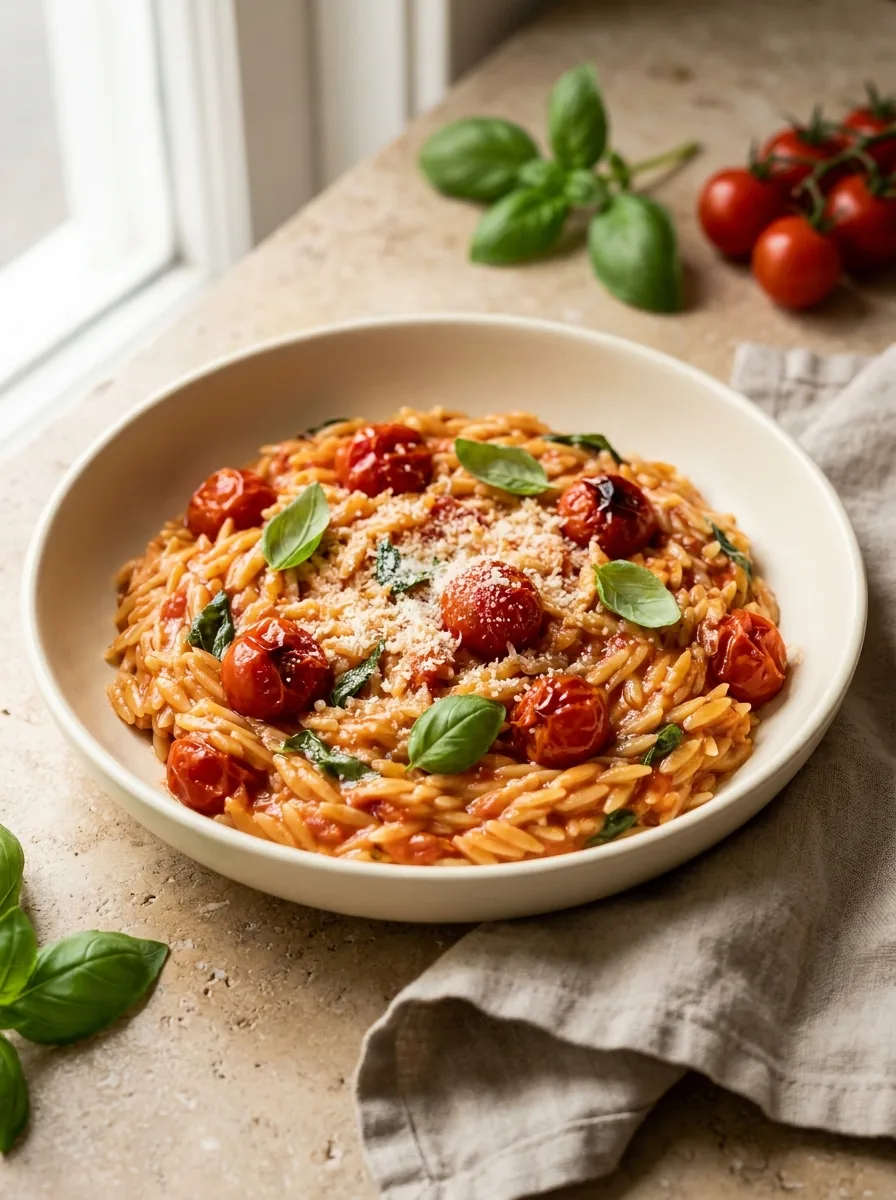
If you are cooking the recipe for the first time, stay close to the listed ingredients and write down any changes you make. Your own oven, pan and preferred portion size are useful things to learn from one attempt. A new recipe is easier to assess when only one variable changes. The supplied photograph is an illustration of the dish, not evidence that this particular recipe has been kitchen-tested.
One-Pot Tomato & Basil Orzo
Yield: 4 servings · Prep 10 min · Cook 20 min
Ingredients
Method
- Soften chopped onion in oil for 5 minutes.
- Add crushed garlic and orzo and stir for 1 minute.
- Add tomatoes and stock and bring to a gentle simmer.
- Cook for 12–15 minutes, stirring frequently and adding water if needed.
- Stir in torn basil and vegetarian cheese.
- Rest briefly before serving.
Two Spoon note
Orzo settles against the base so stir often.
Save image to Pinterest