A useful place to start
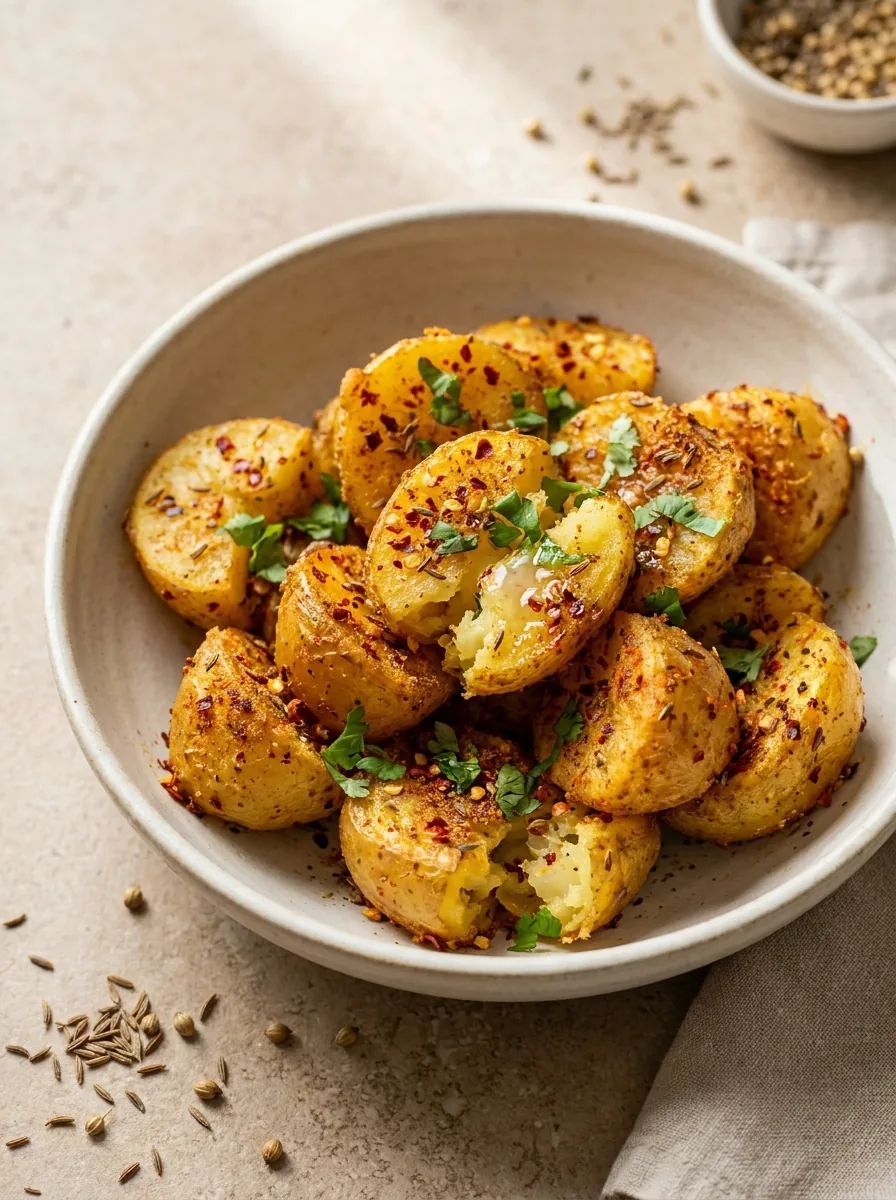
Masala Roast Potatoes brings together potatoes, oil, ground cumin in a method designed around ordinary home-kitchen equipment. The recipe below gives you the quantities, cooking sequence and finishing cues in one place. Read it through before starting, especially if you need to allow a separate chilling, proving or resting period. Reduce chilli to suit your preference. Use the related tools when you need different servings or equipment.
The ingredient list makes 4 servings. That is a recipe yield, rather than a fixed appetite target: a side dish or dessert can be divided differently at the table. Measure the main ingredients before heating a pan or mixing the batter, and check that your vessel has enough room. Serve with yoghurt and curry. Any optional addition should suit the dish and be checked for allergens alongside the original ingredients.
Why this recipe works
Reduce chilli to suit your preference. That detail controls an important part of the texture rather than simply adding another instruction. Vegetables brown better when their surface is reasonably dry and they have space on the tray. Cut pieces to similar thicknesses and toss so the fat coats them lightly rather than collecting in one corner. Sweet glazes can scorch, so add them at the stage shown. Check tenderness with the tip of a knife and colour by sight; one alone does not always mean the vegetables are ready.
The method separates preparation from the stages where heat, moisture or setting time matter most. Keeping the stated order gives you a chance to check the mixture before moving on. Dry potatoes before adding spices. If you make that adjustment, keep the rest of the recipe close to the original on the first attempt so you can judge what changed and whether the balance suits your own kitchen.
Ingredient notes for Masala Roast Potatoes
Potatoes
Cut potatoes into pieces of similar size so the centres soften together. Floury potatoes tend to give fluffier roast centres, while waxy varieties hold their shape more firmly. After parboiling, drain well and let surface moisture steam away before adding fat. A crowded tray traps steam, so use more than one tray if the pieces cannot sit in a single layer.
Oil
Use the listed amount of oil as a starting quantity rather than filling the base of the pan. A neutral oil is helpful when you want the other ingredients to lead, while olive oil contributes its own flavour. Brush or toss food evenly for roasting and air frying. Adding more oil does not compensate for overcrowding, which still traps moisture and prevents even browning.
Ground cumin
Choose ground cumin in the form named in the ingredient list, and measure it before you start cooking. Fresh, dried, concentrated and sweetened versions can behave differently, even when the package names look similar. Read the label for storage instructions and allergens. Prepare it as described in the method so it mixes, softens or browns at the right stage rather than being added as an afterthought.
Ground coriander
Choose ground coriander in the form named in the ingredient list, and measure it before you start cooking. Fresh, dried, concentrated and sweetened versions can behave differently, even when the package names look similar. Read the label for storage instructions and allergens. Prepare it as described in the method so it mixes, softens or browns at the right stage rather than being added as an afterthought.
Turmeric
Choose turmeric in the form named in the ingredient list, and measure it before you start cooking. Fresh, dried, concentrated and sweetened versions can behave differently, even when the package names look similar. Read the label for storage instructions and allergens. Prepare it as described in the method so it mixes, softens or browns at the right stage rather than being added as an afterthought.
Chilli powder
Choose chilli powder in the form named in the ingredient list, and measure it before you start cooking. Fresh, dried, concentrated and sweetened versions can behave differently, even when the package names look similar. Read the label for storage instructions and allergens. Prepare it as described in the method so it mixes, softens or browns at the right stage rather than being added as an afterthought.
Coriander leaves
Choose coriander leaves in the form named in the ingredient list, and measure it before you start cooking. Fresh, dried, concentrated and sweetened versions can behave differently, even when the package names look similar. Read the label for storage instructions and allergens. Prepare it as described in the method so it mixes, softens or browns at the right stage rather than being added as an afterthought.
Lemon juice
Wash the fruit before zesting it, and grate only the coloured outer layer because the white pith tastes bitter. The amount of juice varies between lemons, so measure a stated volume rather than assuming one fruit always supplies it. Add juice at the stage in the method. Acid can brighten a savoury sauce, but too much can also affect dairy texture.
How to make Masala Roast Potatoes
Step 1
Heat oven to 200°C conventional or 180°C fan. Have the ingredients and equipment for the next stage ready before continuing. Work in the order shown so you can check the texture while it is still easy to adjust. Use clean utensils for finished food, taste only when the ingredients are safe to eat, and make small changes rather than adding a large amount of liquid or seasoning at once.
Step 2
Cut potatoes into 3 cm pieces and simmer for 7 minutes. Look for small, steady bubbles rather than a vigorous boil. Gentle cooking lets flavours mix while giving you time to control the thickness. Stir at the base and around the corners where food can catch. If the mixture reduces too far before the main ingredient is ready, add a small amount of water or the specified liquid and continue checking.
Step 3
Drain, steam-dry and roughen edges. Have the ingredients and equipment for the next stage ready before continuing. Work in the order shown so you can check the texture while it is still easy to adjust. Use clean utensils for finished food, taste only when the ingredients are safe to eat, and make small changes rather than adding a large amount of liquid or seasoning at once.
Step 4
Toss with oil and ground spices. Have the ingredients and equipment for the next stage ready before continuing. Work in the order shown so you can check the texture while it is still easy to adjust. Use clean utensils for finished food, taste only when the ingredients are safe to eat, and make small changes rather than adding a large amount of liquid or seasoning at once.
Step 5
Roast for 35–45 minutes, turning halfway, until crisp and tender. Spread the food out rather than piling it into the centre of the tray. Air and heat need to reach the exposed surfaces for browning. Turn or stir only when the method asks, using a spatula to release pieces that have begun to colour. If the tray looks crowded, divide the mixture between two trays and allow for a small change in cooking time.
Step 6
Finish with coriander leaves and lemon. Have the ingredients and equipment for the next stage ready before continuing. Work in the order shown so you can check the texture while it is still easy to adjust. Use clean utensils for finished food, taste only when the ingredients are safe to eat, and make small changes rather than adding a large amount of liquid or seasoning at once.
Building colour on vegetables
Vegetables brown better when their surface is reasonably dry and they have space on the tray. Cut pieces to similar thicknesses and toss so the fat coats them lightly rather than collecting in one corner. Sweet glazes can scorch, so add them at the stage shown. Check tenderness with the tip of a knife and colour by sight; one alone does not always mean the vegetables are ready.
Substitutions and variations
Dry potatoes before adding spices. Make that change before considering other adjustments, then taste or inspect the result as the method allows. A substitute can change moisture, salt, texture or browning even when the quantity looks similar. Check package labels for allergens and vegetarian suitability where relevant. If the change concerns a structural baking ingredient, use the substitute finder’s limitations as well as its suggested ratio.
For masala roast potatoes, start by changing a finishing flavour or accompaniment rather than several main ingredients at once. Fresh herbs, a little citrus or the side dish can change the meal without rebuilding its cooking method. Keep very wet additions separate until you understand how they affect the mixture. A topping is optional, but include its ingredients in your shopping list and any nutrition estimate if you use one.
Serving and planning
Serve with yoghurt and curry. Prepare that accompaniment while the main dish cooks or sets so the finished recipe does not sit waiting unnecessarily. If there are several dishes, write down the serving time and work backwards from each preparation, cooking and resting period. Check equipment as well as time: one oven cannot always run two different temperature settings at once, and a small air fryer may need separate batches.
Storage, freezing and reheating
Cool leftovers and put them in the fridge within two hours, using shallow containers for faster cooling. Use within 48 hours or freeze promptly in labelled portions. Defrost in the fridge and use within 24 hours after defrosting. Reheat only once until steaming hot throughout, stirring sauces and mixed dishes so cold pockets do not remain. Do not leave a warm pan on the worktop for the rest of the evening.
Texture can change after storage even when food has been handled safely. Crisp coatings soften, sauces may thicken and baked crumbs can dry out. Reheat only the portion you intend to eat, and use a method suited to the dish. A small splash of water can loosen a savoury sauce, but it does not replace thorough heating. Label stored portions so you know what they contain and when you made them.
Questions before you cook
Can I make masala roast potatoes for fewer people?
Yes: scale ingredient quantities by the desired yield divided by the original yield. Use a vessel that keeps the intended food depth or allows space between pieces. Do not multiply or divide the temperature by that factor, and begin checking around the method’s stated cues.
Can I prepare ingredients in advance?
You can measure dry ingredients, prepare suitable vegetables and organise equipment ahead. Keep perishable ingredients refrigerated and raw meat separate. Do not mix a raising-agent batter far ahead unless the method specifically includes a resting or chilling stage.
Why might my cooking time differ?
Food size, pan material, oven behaviour and batch size all change the rate of cooking. Use the stated times as a guide alongside the texture and safety checks. Record a sensible adjustment for your own equipment rather than assuming every kitchen matches the timing exactly.
A practical check before starting
Set out the equipment for masala roast potatoes before measuring the ingredients. Use a stable chopping board, a bowl large enough for mixing and a pan or tin suited to the method. Clear a safe space for hot dishes and keep a clean plate ready if cooked ingredients need to come out of the pan. This avoids handling a hot vessel while searching for a utensil or accidentally reusing something that touched raw food.
If you are cooking the recipe for the first time, stay close to the listed ingredients and write down any changes you make. Your own oven, pan and preferred portion size are useful things to learn from one attempt. A new recipe is easier to assess when only one variable changes. The supplied photograph is an illustration of the dish, not evidence that this particular recipe has been kitchen-tested.
Masala Roast Potatoes
Yield: 4 servings · Prep 15 min · Cook 40 min
Ingredients
Method
- Heat oven to 200°C conventional or 180°C fan.
- Cut potatoes into 3 cm pieces and simmer for 7 minutes.
- Drain, steam-dry and roughen edges.
- Toss with oil and ground spices.
- Roast for 35–45 minutes, turning halfway, until crisp and tender.
- Finish with coriander leaves and lemon.
Two Spoon note
Reduce chilli to suit your preference.
Save image to Pinterest

